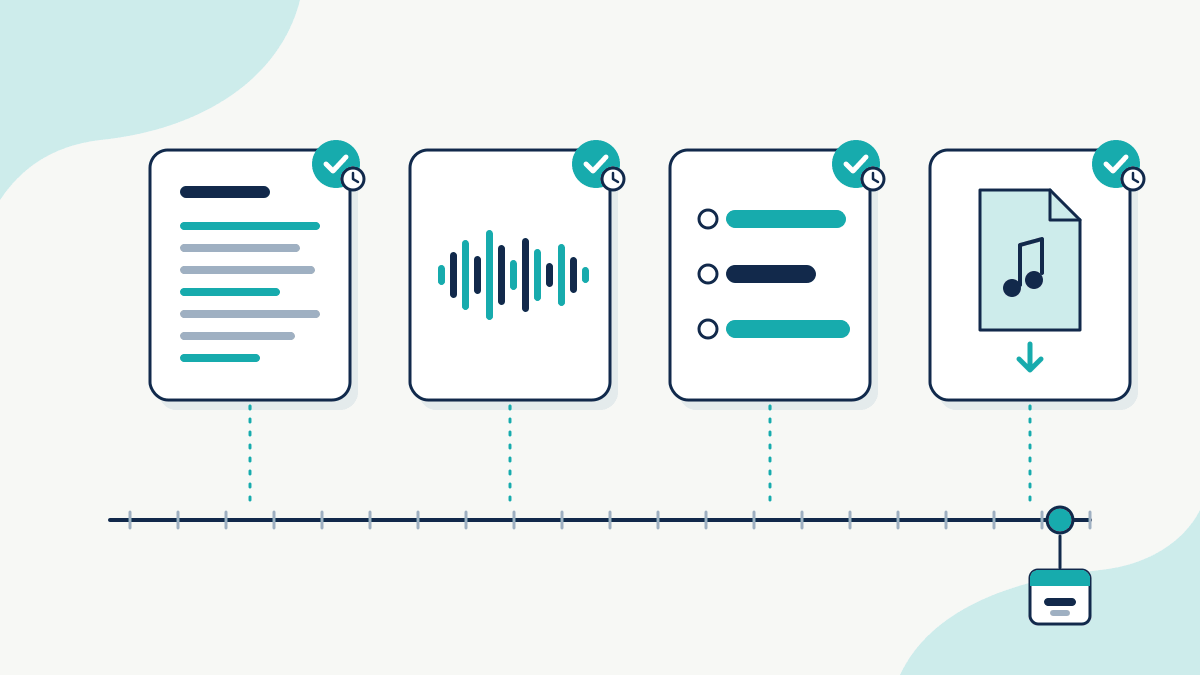
Could ignoring timestamping technology create liability risks for lawyers? In the sources reviewed for this article, from the US, the EU and Australia, we found no general requirement for lawyers to use timestamping. Choosing appropriate technology depends on the applicable law, client and court instructions, and the matter itself. A timestamp is also no substitute for preservation duties: if a matter requires documents or electronic data to be kept, they still have to be kept. The real risk is weak records. A dated file record is one optional tool among several, alongside document management systems, version history and audit logs. TimeBinder® can add a public, dated anchor for a file’s fingerprint. It shows that matching bytes existed no later than a recorded time. It does not show authorship, truth, ownership, or how a court will treat it.
Liability risks for lawyers: three different routes
“Liability” can mean three different things:
- Negligence or malpractice. A civil claim by a client. Whether conduct falls short depends on the standard of care in the jurisdiction and the facts of the matter.
- Disciplinary risk. A complaint under the professional conduct rules that apply to the lawyer.
- Evidence sanctions. Measures a court may take in litigation, for example where electronic information that should have been kept is lost.
Each source below is labelled as law or professional guidance, with its jurisdiction; our own suggestions come later.
United States
ABA Model Rules (model guidance). The American Bar Association’s Model Rule 1.1, Comment [8] says a lawyer “should keep abreast of changes in the law and its practice, including the benefits and risks associated with relevant technology”. Model Rule 1.6(c) says: “A lawyer shall make reasonable efforts to prevent the inadvertent or unauthorized disclosure of, or unauthorized access to, information relating to the representation of a client.” These are model rules: they bind only where a state has adopted them, in that state’s form, so check your own state’s rules. Neither names a particular tool.
Federal Rules of Civil Procedure 37(e) (US federal courts). This rule deals with lost electronic data in federal civil cases. Rule 37(e) says:
If electronically stored information that should have been preserved in the anticipation or conduct of litigation is lost because a party failed to take reasonable steps to preserve it, and it cannot be restored or replaced through additional discovery, the court: (1) upon finding prejudice to another party from loss of the information, may order measures no greater than necessary to cure the prejudice; or (2) only upon finding that the party acted with the intent to deprive another party of the information’s use in the litigation may: (A) presume that the lost information was unfavorable to the party; (B) instruct the jury that it may or must presume the information was unfavorable to the party; or (C) dismiss the action or enter a default judgment.
The rule is about failing to take reasonable steps to preserve electronically stored information. It does not mention or require timestamping, and a timestamp keeps no file, so it cannot replace preservation.
Federal Rules of Evidence 902(14) (US federal courts). Rule 902(14) treats as self-authenticating “Data copied from an electronic device, storage medium, or file, if authenticated by a process of digital identification, as shown by a certification of a qualified person”. Rule 902(13) is similar for records from an electronic process or system. Both need that certification and notice; a timestamp does not supply it by itself.
European Union
eIDAS (EU regulation). Regulation (EU) No 910/2014, as amended by Regulation (EU) 2024/1183, defines an “electronic time stamp” as “data in electronic form which binds other data in electronic form to a particular time establishing evidence that the latter data existed at that time”. A “qualified electronic time stamp” is one “which meets the requirements laid down in Article 42”, and a “qualified trust service provider” is one “who provides one or more qualified trust services and is granted the qualified status by the supervisory body”.
Article 41 says:
- An electronic time stamp shall not be denied legal effect and admissibility as evidence in legal proceedings solely on the grounds that it is in an electronic form or that it does not meet the requirements of the qualified electronic time stamp.
- A qualified electronic time stamp shall enjoy the presumption of the accuracy of the date and the time it indicates and the integrity of the data to which the date and time are bound.
So under Article 41(2), a qualified electronic time stamp enjoys that presumption. Under Article 41(1), non-qualified time stamps are still evaluated as evidence; they are not rejected solely for being electronic or not qualified. Bitcoin anchoring alone does not establish eIDAS-qualified status, which comes through a qualified trust service provider. eIDAS is an evidence and trust-services rule, not a duty on lawyers, and does not make timestamping mandatory.
CCBE Code of Conduct (European professional guidance). The Code of Conduct for European Lawyers is the CCBE’s code, not EU law. Its text proposes that its rules “be adopted as enforceable rules as soon as possible in accordance with national or EEA procedures in relation to the cross-border activities of the lawyer”. So it binds lawyers only where adopted nationally, and it concerns cross-border activity. Separately, the commentary on Principle (g) of the CCBE Charter of Core Principles, in the same CCBE document, says “A lawyer should be aware of the benefits and risks of using relevant technologies in his or her practice.” The Charter is a different instrument from the Code, and neither names a particular tool.
Australia (Queensland), briefly
The Australian Solicitors’ Conduct Rules 2023, notified in Queensland by the Legal Profession (Australian Solicitors Conduct Rules) Notice 2024, require a solicitor to “deliver legal services competently, diligently and as promptly as reasonably possible” (rule 4.1.3 in the QLS text), and rule 9 protects client confidences. Section 95(2) of the Evidence Act 1977 (Qld) says “A court may presume the process or device produced the document or thing containing the statement” where it considers that inference can reasonably be made. None of these mentions timestamping.
Where the real risk sits
Examples of what can go wrong:
- Parties disagree about which draft was circulated, and the file holds near-identical copies with unclear dates.
- File dates change on copying or restoring, so nobody can say which version existed on a key day.
- A system migration leaves older audit logs behind.
The gap is version control, preservation and record-keeping. A timestamp answers one narrow question: did these exact bytes exist by a particular time?
Alternatives, and how they compare
| Tool | What it records | Who controls the record | Limits |
|---|---|---|---|
| Document management system | Versions, check-in history, access | Your firm or vendor | Depends on the system and its settings |
| Version history (cloud office) | Edits over time | The platform provider | Retention settings vary |
| Audit logs | Who opened or changed what, when | Your IT or vendor | May be overwritten or not exported |
| Chain of custody notes | Who held evidence and when | People in the chain | Only as good as the notes kept |
| Trusted third party (notary, escrow, RFC 3161 or eIDAS-qualified time-stamp provider) | Signed record of a document or time | The third party | Process and cost vary |
| Blockchain timestamp | A commitment to a file’s fingerprint, anchored in a public block | No single party | Shows only that matching bytes existed by a time |
See also audit trails vs data provenance vs versioning, RFC 3161 vs blockchain timestamps and blockchain timestamps vs notaries. A document management system may already meet your needs.
How a timestamp works
TimeBinder calculates a file’s SHA-256 fingerprint, a short code worked out from its exact contents, in your browser, so the file itself is not uploaded. A cryptographic commitment to that fingerprint, which may be combined with others, is then anchored in a block on the Bitcoin blockchain. Bitcoin is secured by proof of work: changing an earlier block would mean redoing the electricity-backed work faster than the rest of the network. Until the block is confirmed, the record is pending. Once the Bitcoin anchoring is confirmed, you can verify the proof against that recorded commitment. See how TimeBinder works and how to check a file still matches its fingerprint.
Confidentiality, privilege and metadata
- Only the fingerprint is involved. The client file is not uploaded or published.
- It still leaves a public trace. A cryptographic commitment and the block timing are public. Disclosing the proof or the fingerprint can let someone who holds the same file match it. The original file is not published.
- Get instructions where appropriate, in line with the confidentiality rules that apply to you.
- Metadata stays in the file. Timestamping doesn’t remove author names, tracked changes or comments.
A suggested lawyer workflow
- Decide if it’s needed: may this file’s timing be disputed, and what do the client and any court orders require?
- Preserve first, in your own systems.
- Finalise the version with a clear name.
- Check confidentiality and client instructions.
- Record it and keep the certificate with the matter file.
- Keep the original bytes unchanged; any edit gives a new fingerprint.
- Make a file note of what was timestamped, when and why.
For firm-level detail, see timestamping for law firms and legal document verification.
What a timestamp does not show
It does not show who wrote or owns a document, that the contents are true, or whether AI was used. It does not decide whether a court will rely on it, and it does not replace preservation, disclosure or chain of custody notes.
When TimeBinder isn’t the right tool
If your document management system already answers the timing question, you may not need more. If a matter calls for an eIDAS-qualified time stamp or a signed third-party record, use that. If a public record of this kind would concern a client, don’t create one. And for storage or preservation, use your own systems; TimeBinder keeps no copy of the file.
This is general information, not legal advice.
FAQ
Is there a rule requiring lawyers to use blockchain timestamping?
In the sources reviewed, we found no general requirement. What is appropriate depends on the applicable law, client and court instructions, and the matter.
Could not using timestamping lead to a negligence claim?
Whether conduct falls short depends on the standard of care in the jurisdiction and the facts. Preservation and record-keeping failures can create risks independently of timestamping. A timestamp is one optional tool, not a substitute for preservation.
Does a timestamp publish my client’s document?
No. The original file is not published. A cryptographic commitment and the block timing are public, and disclosing the proof or the fingerprint can let someone who holds the same file match it, so consider confidentiality and client instructions first.
Does a Bitcoin timestamp get the eIDAS presumption?
Under eIDAS Article 41(2), the presumption applies to qualified electronic time stamps. Bitcoin anchoring alone does not establish eIDAS-qualified status. Under Article 41(1), a non-qualified time stamp is still evaluated as evidence and is not rejected solely for being electronic or not qualified.
Keep a dated record where it matters
Whether to timestamp is guided by the applicable duties and the needs of the matter; the sources reviewed do not establish a general timestamping mandate. You can start on the Free plan, and no credit card is required. See TimeBinder plans and pricing