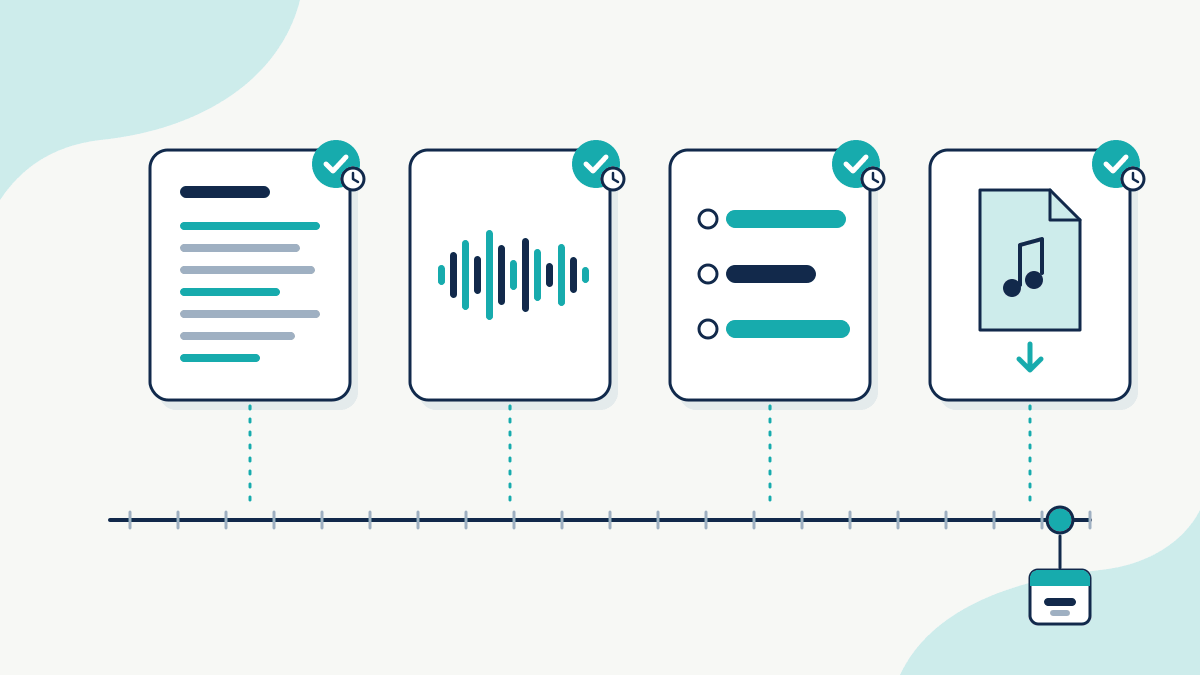
Short answer: In the US, the UK and most of Europe, the architect who draws the plans (or the architect’s employer) usually owns the copyright, even after the client pays. The client normally gets the copies and a licence to use the design for the project it was drawn for. A signed contract can change that: some clients take a written assignment, and in Germany copyright itself cannot be transferred at all, only rights of use. Disputes often come down to which version was issued when. TimeBinder® records a SHA-256 fingerprint of each drawing set on the Bitcoin blockchain, so you can later show those exact files existed no later than the recorded time. It does not show who drew them or who owns the copyright.
Who owns architectural drawings by default
Two things are easy to mix up: owning the paper or PDF, and owning the copyright. A client who pays for a drawing set owns those copies. The right to copy the design, adapt it or build it again is a separate right, and by default it stays with the author.
For an architect in private practice, the author is usually the architect or the firm. For an architect employed by a practice, it is usually the employer. The client is rarely the default owner. What the client gets instead is a licence: permission to use the design for a particular project. The questions that follow are almost always about the scope of that licence.
United States: copyright, AIA B101 and implied licences
Since the Architectural Works Copyright Protection Act of 1990, US copyright protects the design of a building as an “architectural work”, and the drawings are protected as well (17 U.S.C. § 101). A few points matter most in practice:
- Standard forms keep copyright with the architect. Under the AIA B101 owner-architect agreement, the architect and its consultants are deemed the authors and owners of their Instruments of Service. The owner gets a licence to use them for the project. See the AIA’s own summary of Instruments of Service rights.
- “Work made for hire” clauses may not work. Outside employment, the statute limits commissioned works made for hire to listed categories, and architectural plans are generally not among them. A client who wants ownership usually needs a signed written assignment (17 U.S.C. § 204(a)).
- Licences can be implied. In I.A.E., Inc. v. Shaver (7th Cir. 1996), an architect who delivered schematic drawings for an airport building without warning against further use was held to have given an implied licence to complete that building.
- Building owners keep some freedom. Under 17 U.S.C. § 120, people can photograph a building visible from a public place, and the owner of a building can alter or demolish it without the architect’s consent.
- Registration matters if you sue. For US works, registration generally comes before an infringement suit, and statutory damages and attorney’s fees depend on timely registration. A timestamp is not a substitute; see copyright registration in the USA and copyright registration vs a timestamp.
United Kingdom: the Blair v Osborne & Tomkins licence
Under the Copyright, Designs and Patents Act 1988, a building and its drawings are artistic works. The architect owns the copyright unless the drawings were made by an employee in the course of employment (then the employer owns them) or there is a signed written assignment. A commission alone does not move ownership to the client.
The leading case on reuse is Blair v Osborne & Tomkins [1971]. The Court of Appeal held that a client who engages an architect to prepare plans for a site has an implied licence to use them to build on that site, and that the licence can pass to a buyer of the site. It does not cover building the design somewhere else. Express terms, such as those in RIBA appointments, can narrow or widen that position.
European Union: national law decides, and moral rights are stronger
There is no single EU rule on who owns commissioned plans. Each country applies its own copyright law, inside the frame of the Berne Convention, which lists works relating to architecture. Two examples show how different the answers can be:
- Germany. Copyright itself cannot be transferred, except on death (§ 29 UrhG); the architect grants rights of use instead. Where the contract is silent, the scope follows the purpose of the contract (§ 31(5) UrhG), so an architect hired through detailed design is usually taken to allow the client to build that building, not to reuse the design elsewhere.
- France. The Code de la propriété intellectuelle protects architectural works and plans, and the author’s moral right is perpetual and cannot be given away. French courts have weighed that right against an owner’s legitimate need to adapt a building.
EU law also lets member states allow the use of a building, or its drawings or plans, to reconstruct that building without permission (Directive 2001/29/EC, Art. 5(3)(m)). Whether and how a country uses that option varies, so check the national rules for the project.
Australia is a separate system again. If you work there, see who owns the copyright in house plans in Australia.
Common ownership questions at a glance
| Situation | Usual starting point (US, UK, EU) | What usually decides it |
|---|---|---|
| Client paid in full | Client owns the copies and a project licence; architect keeps copyright | The signed agreement and any assignment |
| Client fires the architect mid-project | Client may often still build that project, sometimes on conditions | Termination and licence terms; what was issued before termination |
| Client wants a second building from the same plans | Usually needs the architect’s permission | Licence scope; whether the design was reused or only the idea |
| New architect modifies the drawings | Depends on the licence; moral rights may matter in parts of Europe | Contract wording; which version each party drew |
| Competitor builds a similar design | Copying, not similarity, is the issue | Access, similarity and which design existed first |
Where ownership disputes turn on dates
Many of these arguments are not really about the law. They are about the record. Which schematic did the client receive before they stopped paying? Was the version the new architect worked from the one you issued, or a later revision? Did your concept exist before the competitor’s tender? Email chains, cloud folders and file dates help, but they are easy to dispute: file dates change when files are copied or zipped, and folder history sits with one provider.
A fixed, independent date for each issued set helps answer “which version existed when” without arguing over metadata. Related reading: what to do if a client used your design without paying and how to show an AutoCAD DWG existed before a date.
A simple dated record for each issue
- Put the licence in writing. Name the project, the site and what the client may do with the drawings, and say when the licence starts (for example, on payment).
- Export each issue as fixed files. Schematic design, design development, construction documents and each revision: save the PDFs and model exports you actually send.
- TimeBind the issue set. One TimeBind covers up to 10 files, so a zip of the full set plus the transmittal fits easily. Each file is fingerprinted in your browser and is not uploaded.
- Record what you handed over. The free Handover Receipt tool lists each delivered file with its fingerprint, so both sides can check the same files later.
- Keep the originals unchanged. Any edit changes the fingerprint. You can check a file against its fingerprint with the free SHA-256 file hash checker.
For studio-wide workflows, see timestamping for designers and architects and timestamping for design and engineering firms.
What a TimeBind shows, and what it does not
- It shows a file existed no later than the recorded time.
- It shows the file you check later still matches that fingerprint.
- It does not show who drew the file, who owns the copyright, or what the contract says.
- It does not decide how a court, arbitrator or client will treat the record.
If you need to register copyright, draft or review an owner-architect agreement, or bring a claim, use the registration office or a lawyer in the relevant country. TimeBinder keeps no copy of your files, so it is not a backup either.
This is general information, not legal advice.
FAQ
If I paid the architect, do I own the drawings?
Usually not the copyright. In the US, UK and most of Europe, paying the fee normally gets you the copies and a licence to use the design for your project, not ownership of the copyright. A signed contract can change that, so read your agreement first.
Can a client build the same house twice from one set of plans?
Often not without permission. A project licence, written or implied, usually covers the building on the site it was drawn for. A second building elsewhere generally needs the architect’s consent, unless the contract says otherwise.
Can a new architect change the original architect’s drawings?
It depends on the licence. Under the AIA B101 form, the owner may keep using the documents for the project after the original architect leaves, with conditions. Outside a written agreement, courts look at what was implied for that project. In some European countries, moral rights can also limit certain changes.
Does a timestamp prove I own the copyright in my plans?
No. A TimeBind shows that a file existed no later than the recorded time and still matches its fingerprint. It does not show who drew it, who owns the copyright, or what your contract says. It can support a dated account of which version existed when.
Does TimeBinder store my drawing files?
No. The SHA-256 fingerprint is calculated in your browser and only that fingerprint, or a commitment to it, is recorded on the Bitcoin blockchain. Keep your own copies of the exact files you timestamp.
Date your next issued drawing set
A single Pooled TimeBind is US$5 and covers up to 10 files; an ASAP TimeBind is US$15 and gets its own Bitcoin transaction. The Free plan includes 1 Token a month. See TimeBinder plans and pricing