How can a writer prove a manuscript existed before submitting it? The most reliable way is to keep the exact file you send, record its SHA-256 fingerprint with an independent timestamp before it leaves your hands, and keep your drafts as supporting evidence. Emailing the manuscript to yourself or posting it to yourself is weaker than most writers think, and in Australia and the UK there is no official register to fall back on. This guide covers what each option really shows, and a simple routine to follow before you query agents, pitch publishers or enter a competition.
Disclosure: I’m Inna Hall, an Australian lawyer and co-founder of TimeBinder, which is mentioned below. This is general information, not legal advice. Copyright law differs between countries, so get advice on your own situation.
Table of Contents
Why a date matters when you submit
This isn’t about distrusting agents, editors or competition judges. Submitting means your work leaves your control, often to many people at once, and you have no say over where it is forwarded or stored. If a similar book, script or story appears later, the first question anyone will ask is simple: when did your version exist?
Copyright arises automatically when you write the work down, so you don’t need to do anything to own it. What you may need is evidence. In a dispute, the person who can show their text existed earlier, in a form nobody could have edited since, starts from a much stronger position. That evidence is easy to create before you submit and almost impossible to create afterwards.
Why emailing it to yourself is weak
Emailing a manuscript to yourself, or posting a sealed copy to yourself, is often called “poor man’s copyright”. The US Copyright Office FAQ says plainly that there is no provision in copyright law for it and that it is not a substitute for registration.
It can still be some evidence, but it has real gaps:
- You control the mailbox. Messages can be deleted, re-sent or forwarded, and an exported email can be edited before anyone sees it.
- Checking it is hard. Confirming that an email and its attachment are genuine may need records from the email provider, which can be slow, expensive or no longer available years later.
- Envelopes can be opened and resealed, and a postmark shows when an envelope was posted, not what was inside it.
- It ties the date to a message, not a file. If you keep editing the manuscript, the email proves only that some version existed.
We compare the two approaches in more detail in emailing yourself as proof vs a blockchain timestamp.
Registration: the US yes, Australia and the UK no
In the United States, the Copyright Office runs a register, and you can register a literary work, including an unpublished manuscript. Registration isn’t required for copyright to exist, but for US works it is generally needed before you can sue for infringement. Timing also matters: under 17 U.S.C. section 412, statutory damages and attorney’s fees are usually only available if the work was registered before the infringement began, or within three months of first publication. US writers should treat registration as the main tool and a timestamp as a supplement.
In Australia, there is nothing to register. The Attorney-General’s Department confirms there is no formal registration system, and private websites that offer to “register” your copyright have no official status. The UK is the same. GOV.UK says protection is automatic and there is no register of copyright works. In both countries, the evidence you create yourself is what you have.
Wherever you live, remember that copyright protects your words, not your idea. A premise, a plot twist or a setting can be used by someone else in their own words. Evidence of your date helps with copying of the actual text, and with showing who had a document first. It can’t turn an idea into property.
Drafts and version history
Your drafts are valuable, mostly because they show how the work developed. Notes, outlines, early chapters and revisions are hard to fake convincingly in bulk, and they help answer the question of who actually wrote the book, which a single timestamp can’t.
Keep them deliberately:
- Use the version history in your writing tool, such as Google Docs version history, Word’s version history or Scrivener snapshots.
- Save numbered copies at milestones, such as “first-draft-complete” or “revised-after-beta-readers”, rather than overwriting one file forever.
- Keep notes, outlines and research in the same project folder.
The weakness is the same as with email. File dates and version history come from your computer or from a platform you use, and they can be changed or lost when an account closes. They work best when at least some of the milestones are anchored by something independent.
Hash and timestamp before you send
A SHA-256 hash is a 64-character fingerprint calculated from a file’s exact contents. Change one comma and the fingerprint changes completely. You can try it with our free SHA-256 file hash checker, which works in your browser.
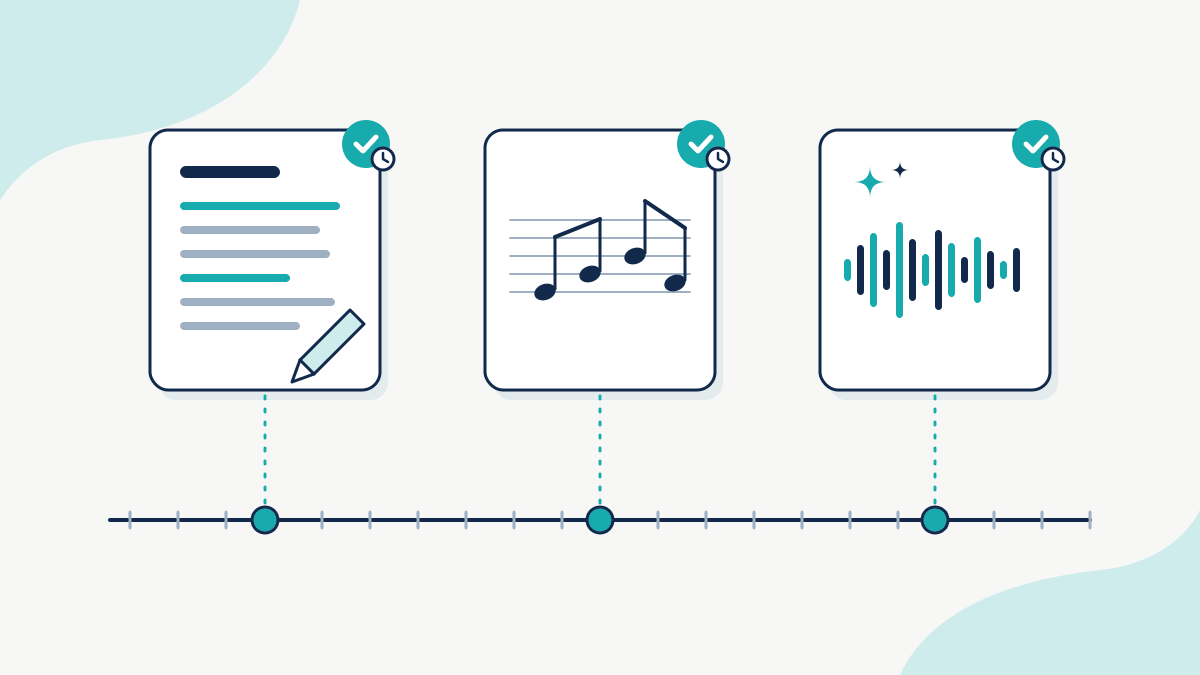
A blockchain timestamp records that fingerprint on a public ledger nobody controls, so anyone can later check that a file with exactly that fingerprint existed at or before that time. With TimeBinder, your files are hashed in your browser and are never uploaded, so the manuscript itself never leaves your computer. One TimeBind covers up to 10 files, which suits a typical submission package:
- the manuscript or sample chapters, exactly as sent
- the synopsis and query letter or pitch
- an outline, series bible or treatment
- a recent draft or notes file showing the work in progress
The key detail is to timestamp the exact file you send. Export the PDF or DOCX, TimeBind that file, and attach that same file to your submission. If you re-export later, even without visible changes, the fingerprint may change. Our manuscript timestamping page covers this in more detail.
What this proves, and what it doesn’t
A timestamp proves that a specific file existed, unchanged, at or before a specific time. That’s useful, but it is narrower than many people assume:
- It doesn’t prove you wrote it. Authorship comes from drafts, notes, witnesses and your own account. A timestamp makes those more credible by fixing a date.
- It doesn’t prove copying. Similar stories are written independently all the time. Showing your text was earlier is one step; showing the other person had access to it and copied it is another.
- It doesn’t replace US registration or any other formal step available where you live.
- It only works if you keep the file. Lose the exact file and the fingerprint has nothing to match.
An illustrative example: a screenwriter TimeBinds her pilot script, a two-page pitch and her series outline the night before entering a competition. Two years later a similar series is announced. She can show that her script and outline existed, word for word, before the competition opened. Whether the new series copied her work is still a question for lawyers and courts, but her date is no longer in doubt.
A checklist before you submit
- Freeze the version. Export the manuscript and supporting documents exactly as you’ll send them.
- TimeBind the package (up to 10 files) and add a Reference such as the title, the agent, publisher or competition, and the date.
- Send the same files. Don’t re-export after timestamping.
- Keep a submission log: who received what, when, and how.
- Store the files with the certificate in one folder and back it up in two places.
- In the US, consider registration, especially before wide distribution or publication.
For most submissions a Pooled TimeBind (1 Token) is enough. For a book deal, a film option or anything you’d most expect to be argued about, an ASAP TimeBind (3 Tokens) gets its own Bitcoin transaction that anyone can check without relying on TimeBinder. The Free plan gives you 1 Token a month with no credit card required.
AI can rewrite files. It can’t rewrite time. Before your next submission, give your manuscript a date nobody can quietly change.
This article is general information, not legal advice. Sources were checked on 26 October 2026. More free tools are on our free tools page.
Frequently Asked Questions
-
Is emailing my manuscript to myself proof of copyright?
Not on its own. The US Copyright Office says this “poor man’s copyright” has no basis in copyright law and is not a substitute for registration. It may be some evidence of a date, but you control the mailbox and it can be hard to verify later.
-
Do I need to register copyright before querying agents?
No. Copyright exists automatically once the work is written down. In the US, registration matters if you ever need to sue, and its timing affects the remedies available, so ask a lawyer about your plans. Australia and the UK have no register.
-
Does timestamping mean anyone can read my manuscript?
No. Only the SHA-256 fingerprint is recorded, and it can’t be turned back into text. With TimeBinder the file is hashed in your browser and never uploaded.
-
Should I timestamp every draft?
Not necessarily. Milestone drafts and every version you send to someone are the ones that matter most. Your version history fills in the gaps between them.