
-

Registrar Notes Exposed a Backdated Certificate Approval Claim
The dates did not align. An Australian private college faced a serious education certificate verification dispute after a former program coordinator alleged the registrar’s office had approved a late-issued graduate certificate months earlier than records showed, creating regulatory exposure, contract risk with an overseas partner, and reputational harm. The matter was resolved when a blockchain…
-

The Lease Amendment That Arrived Too Late to Stand
The record held. A disputed lease amendment placed a commercial landlord, tenant, and external asset manager at risk of regulatory scrutiny, rent-loss claims, and reputational damage after one side alleged that revised incentive terms had been agreed before settlement. Using real estate document verification supported by a blockchain timestamp, the parties established when the genuine…
-
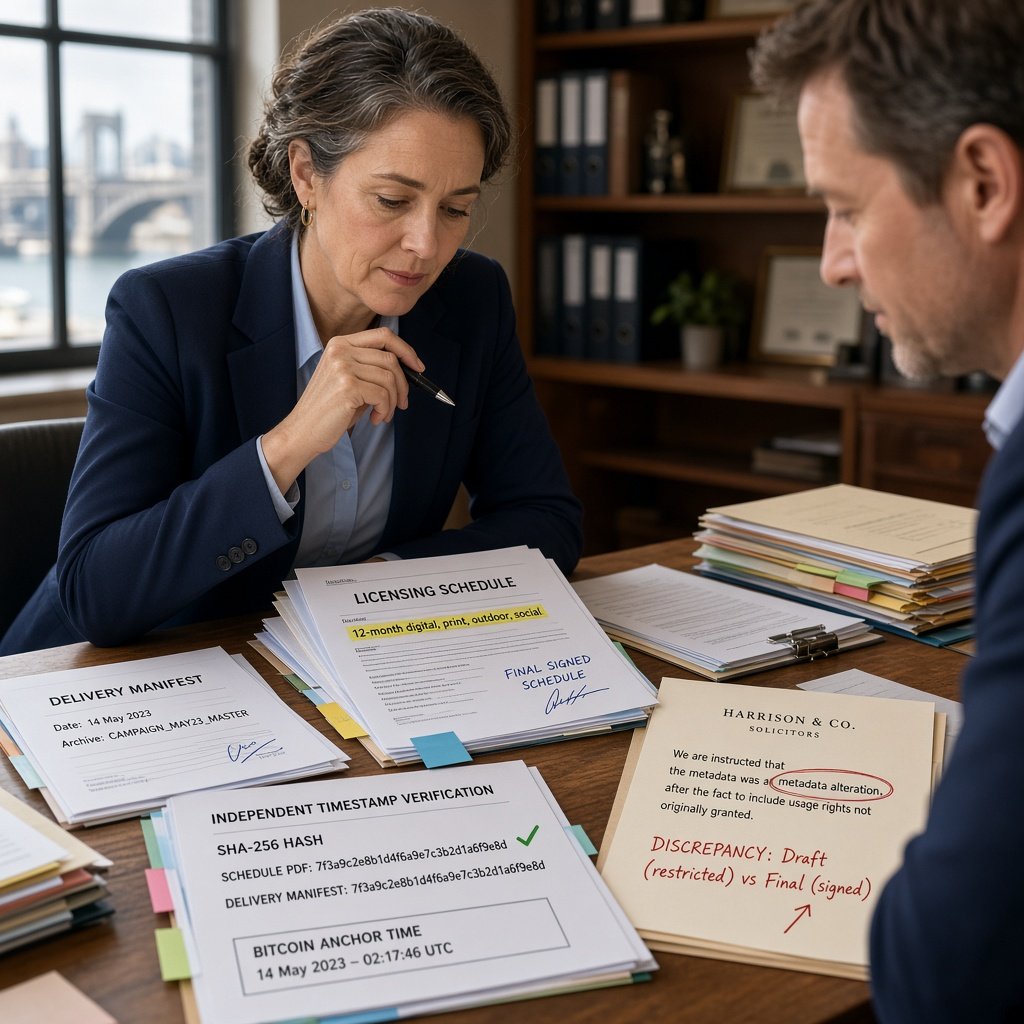
Agency Preserved Licensing Rights in a High-Stakes Image Ownership Fight
One archive file changed the case. A national advertising photographer accused a Sydney creative agency of misusing campaign images after a lucrative retailer rollout, creating a photo ownership dispute with serious exposure for licence fees, indemnity claims, and reputational damage; the outcome turned on independently timed evidence showing when the original files existed and which…
-

Board Minutes Timing Evidence Settled a Fund Valuation Challenge
It came down to timing. A mid-sized Australian funds management group faced an audit committee crisis when disputed board papers appeared to show that a valuation methodology had been approved only after a sharp quarter-end markdown. The professional risk was severe: possible misleading disclosure to investors, regulator scrutiny, partner qualification of accounts, and personal exposure…
-

Grant Misconduct Allegation Turned on One Research Protocol Revision
A date changed everything. When an Australian biomedical institute was accused of quietly revising a human-subjects protocol after recruitment began, the dispute threatened grant repayment, ethics sanctions, authorship damage, and reputational harm. The institute resolved the matter by producing contemporaneous research protocol timestamping evidence that established which draft existed before enrolment and which edit appeared…
-

Agency Faced Licensing Exposure Over a Disputed Campaign Brief
The brief became the evidence. An Australian creative agency entered a costly dispute after a national retail client alleged that key usage restrictions had been added to a campaign brief after approval, exposing the agency to indemnity claims, unpaid invoices, and reputational damage. The firm relied on creative work verification records to show when the…
-
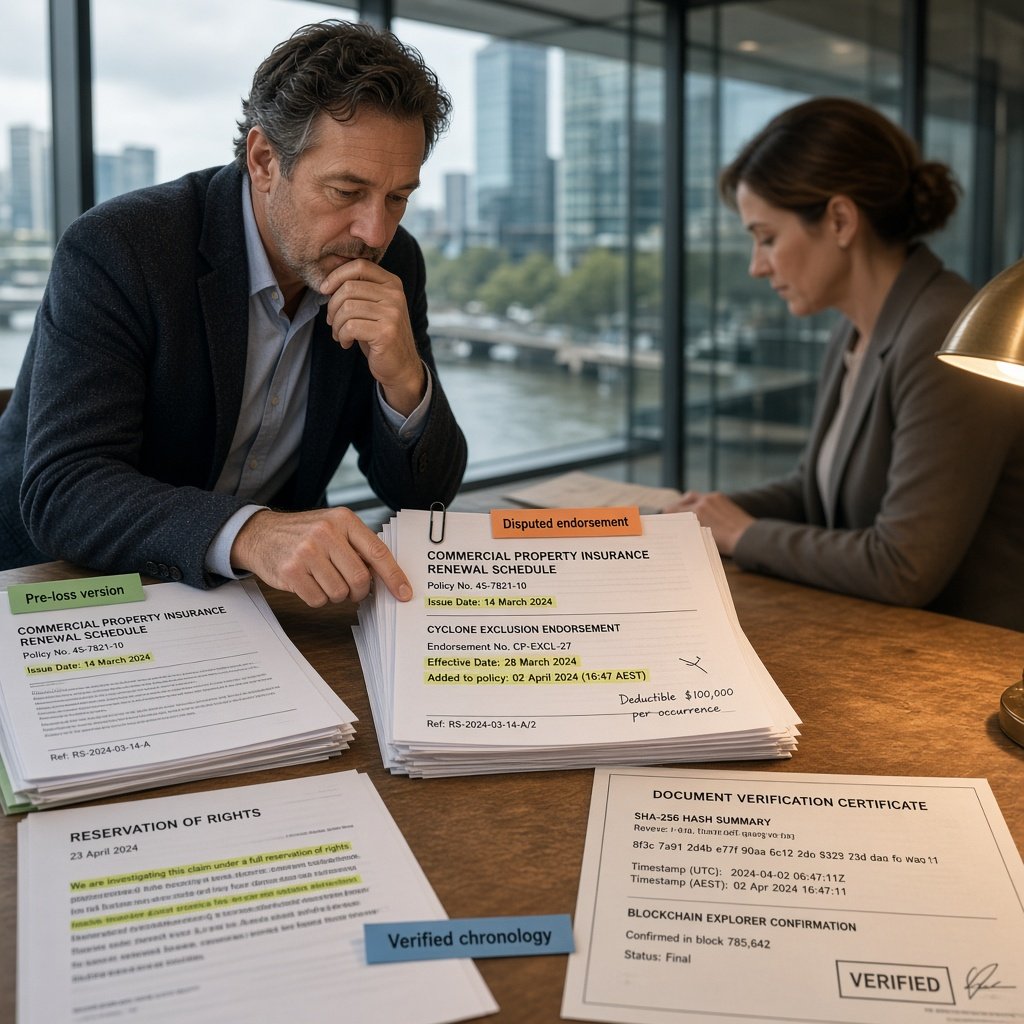
The Endorsement Date That Changed a Catastrophic Loss Claim
Everything turned on a date. A coastal commercial property claim escalated into a seven-figure coverage dispute when an insurer, a broker, and a wholesale placement team disagreed over when a cyclone-exclusion endorsement was actually circulated and accepted. The professional risk was severe: allegations of backdating, failed disclosure, and unfair claims handling threatened licensing scrutiny, litigation…
-
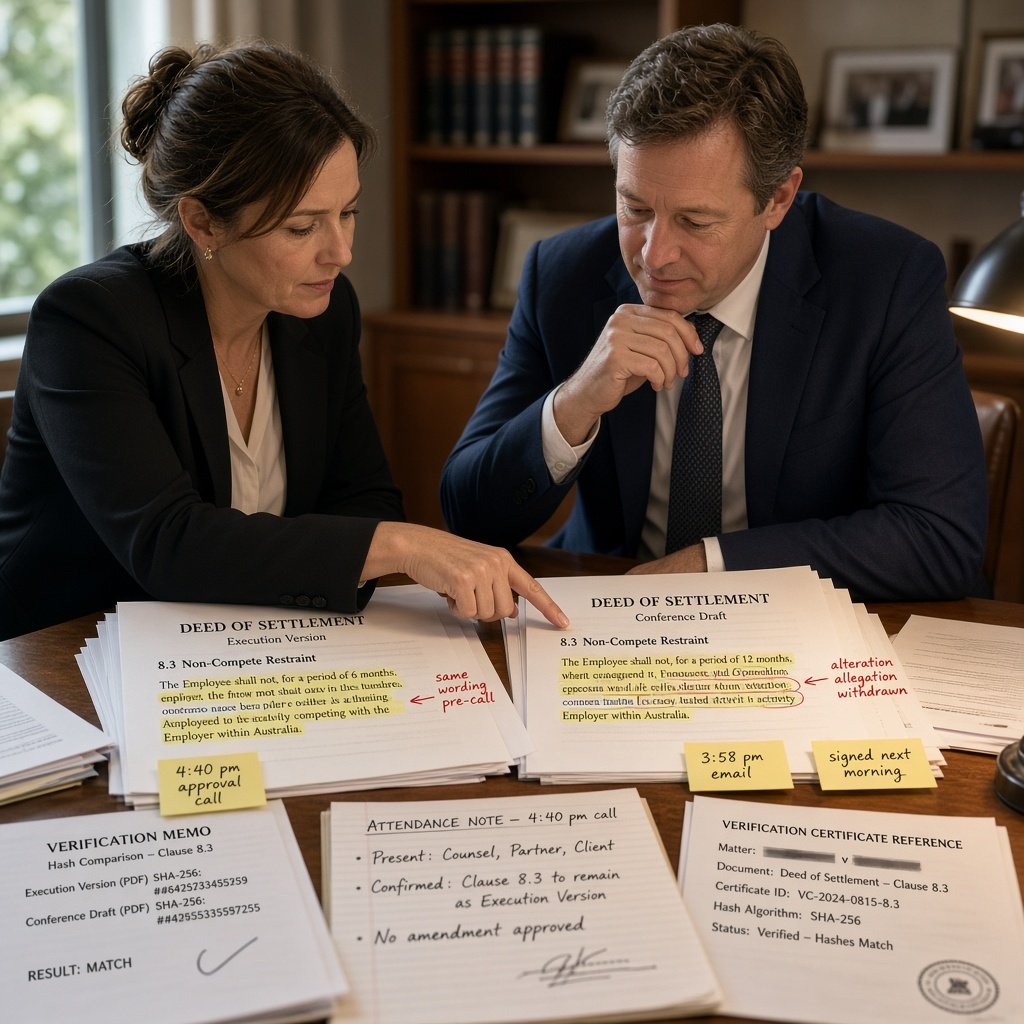
The Signed Deed Version That Decided a Negligence Claim
A deed version became the centre of a professional negligence dispute. A mid-sized Sydney law firm faced insurer scrutiny, a client damages claim, and potential reputational harm after a property settlement deed appeared to contain a late-added restraint clause; legal document timestamping helped show which draft existed when, and the matter settled before trial once…
-

Was the Wet-Hire Rate Sheet Altered After Sign-Off?
Serious doubts emerged. A regional equipment supplier faced a wet hire contract dispute after a project contractor alleged the signed rate schedule had been changed after approval, exposing both sides to six-figure payment risk, possible misleading-conduct allegations, and reputational damage during a live infrastructure job. The disagreement centred on whether the agreed hourly wet-hire charges,…
-
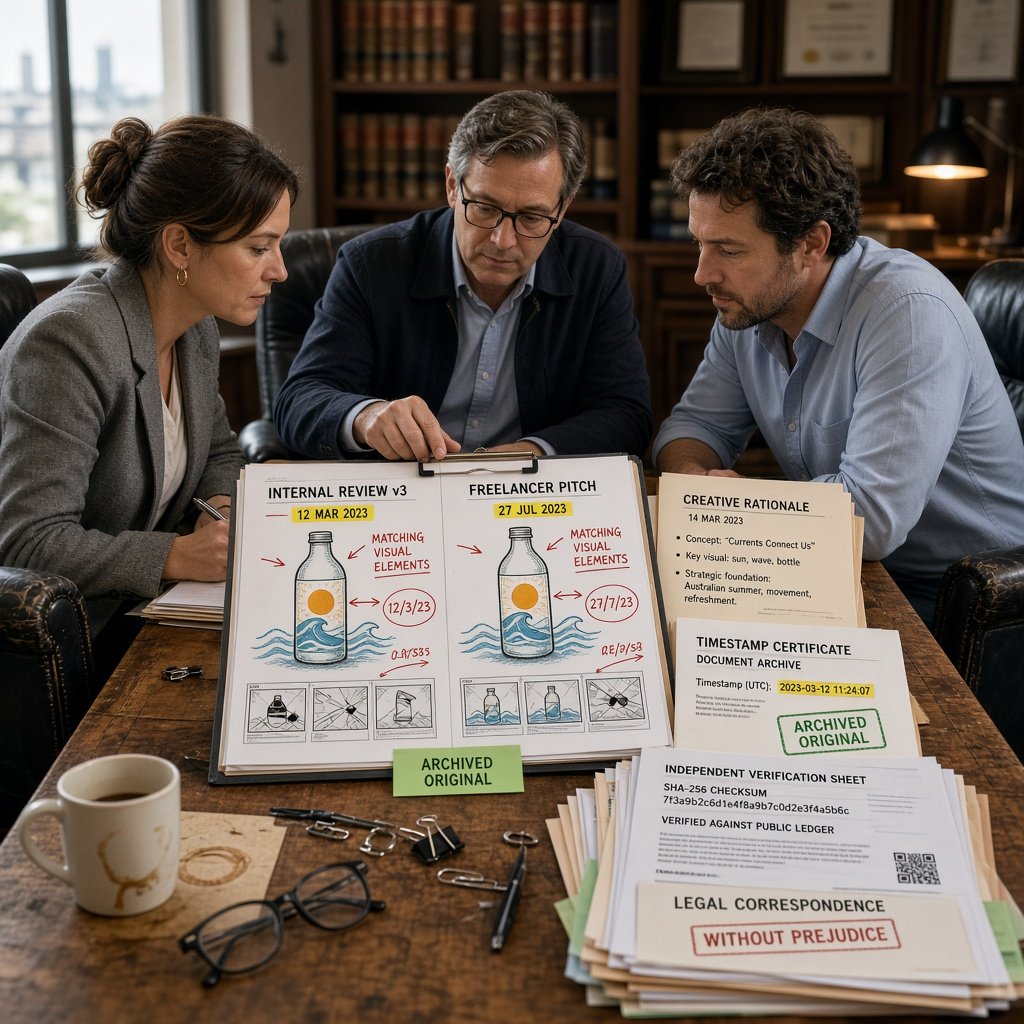
Agency Keeps National Campaign Rights After Timestamp Evidence Prevails
One timestamp settled the record. This fictional and illustrative case study concerns a disputed advertising campaign master file, the professional risk of lost rights, misleading client representations, and regulatory exposure, and the outcome was a negotiated settlement after creative work verification evidence established the earlier file history. Within days of the dispute escalating, the agency…

Recent Posts
- Registrar Notes Exposed a Backdated Certificate Approval Claim

- The Lease Amendment That Arrived Too Late to Stand

- Agency Preserved Licensing Rights in a High-Stakes Image Ownership Fight

- Board Minutes Timing Evidence Settled a Fund Valuation Challenge

- Grant Misconduct Allegation Turned on One Research Protocol Revision
